
If you’re missing several teeth, or all of them, you’ve probably started thinking about your replacement options. And chances are, you’ve heard about both dentures and dental implants. But which one is actually right for you?
It’s a great question, and the answer isn’t the same for everyone. At Cavanaugh Dental, we’ve been helping Lansing-area patients rebuild their smiles for over 30 years. We’ve guided countless people through this exact decision, and we know there’s no one-size-fits-all answer. Let’s break down the real differences between dentures and implants, so you can make an informed choice with confidence.
Traditional Dentures: Tried and True
Dentures have been around for a long time, and for good reason. A full set of dentures replaces all the teeth on your upper or lower arch. Partial dentures fill in gaps when you still have some natural teeth remaining. They’re custom-made to fit your mouth and look natural.
The pros of dentures:
- They’re more affordable upfront than implants.
- The process is non-surgical, which appeals to many patients.
- They can be made relatively quickly, usually within a few weeks of your extractions.
The cons: Dentures sit on top of your gums. They don’t replace the tooth roots, so your jawbone can shrink over time. That can lead to a loose fit, slipping, and the need for frequent adjustments or relines. Some people also find them less comfortable for eating certain foods.
You also have to remove them at night to clean them. They also require adhesives to stay in place, which many patients find inconvenient or embarrassing.
Dental Implants: A Permanent Solution
A dental implant is a small titanium post that we place into your jawbone. Over time, the bone grows around it, creating a stable, permanent foundation. On top of that post, we attach a natural-looking crown, bridge, or even a full set of replacement teeth.
The pros of implants:
- They feel and function like natural teeth.
- You can eat whatever you want, such as steak, corn on the cob, apples- without worry.
- Because they replace the tooth root, they actually help preserve your jawbone and keep your face structure intact.
- Implants don’t slip. They don’t require adhesives.
- With good care, they can last decades or even a lifetime.
The cons: Implants cost more upfront. The process takes longer, several months from start to finish. And they require surgery, which means a healing period.
What About Implant-Supported Dentures?
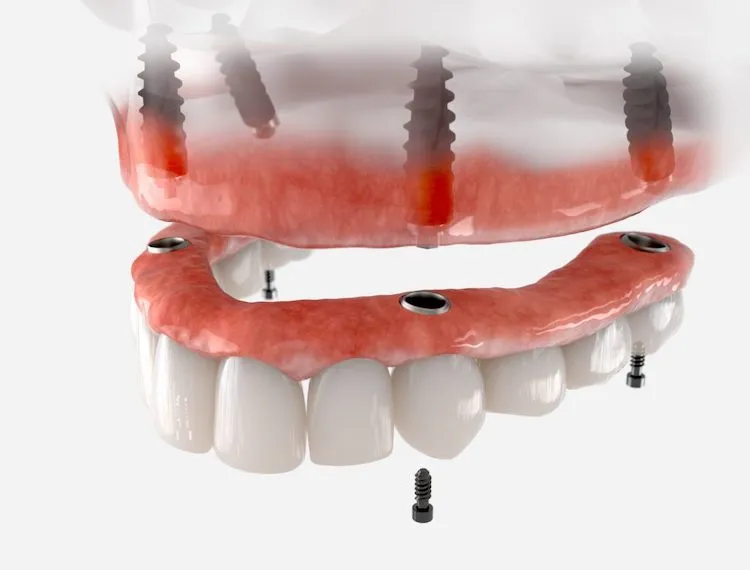
There’s a middle ground that many patients don’t know about: implant-supported dentures. This option uses two to four implants to anchor a full denture securely. The denture snaps onto the implants but can still be removed for cleaning.
This gives you implant stability with the convenience of a removable denture. You get better chewing power than traditional dentures, less slipping, and more confidence. And it’s often more affordable than replacing every missing tooth with an individual implant.
How to Choose: Questions to Ask Yourself
The right choice depends on your unique situation. Here are a few questions to think about:
- What’s your budget? If cost is a major concern, dentures may be the more accessible option upfront. But remember, implants can save you money over time since they rarely need replacement.
- How much bone do you have? Implants require enough healthy jawbone to support them. If you’ve been missing teeth for a long time, you may need a bone graft before implants can be placed.
- Are you comfortable with surgery? Some people are fine with it. Others prefer to avoid it. Both are valid, and we respect either choice.
- What are your lifestyle expectations? If you want to eat anything without worry and never think about adhesives, implants are hard to beat. If you’re okay with something removable and a simpler process, dentures may suit you well.
We’ll Help You Decide
There’s no wrong answer here. Both dentures and implants have helped thousands of patients restore their smiles and their confidence. At Cavanaugh Dental, we take time to listen to your goals, examine your oral health, and walk you through your options. We’ll explain the costs, timeline, and what to expect so you can feel confident in your decision.
If you’re ready to explore your tooth replacement options, call us at (517) 760-6845 or request an appointment online. Whether you’re in Lansing, Holt, Dimondale, or Mason, we’re here to help you find the solution that’s right for you.